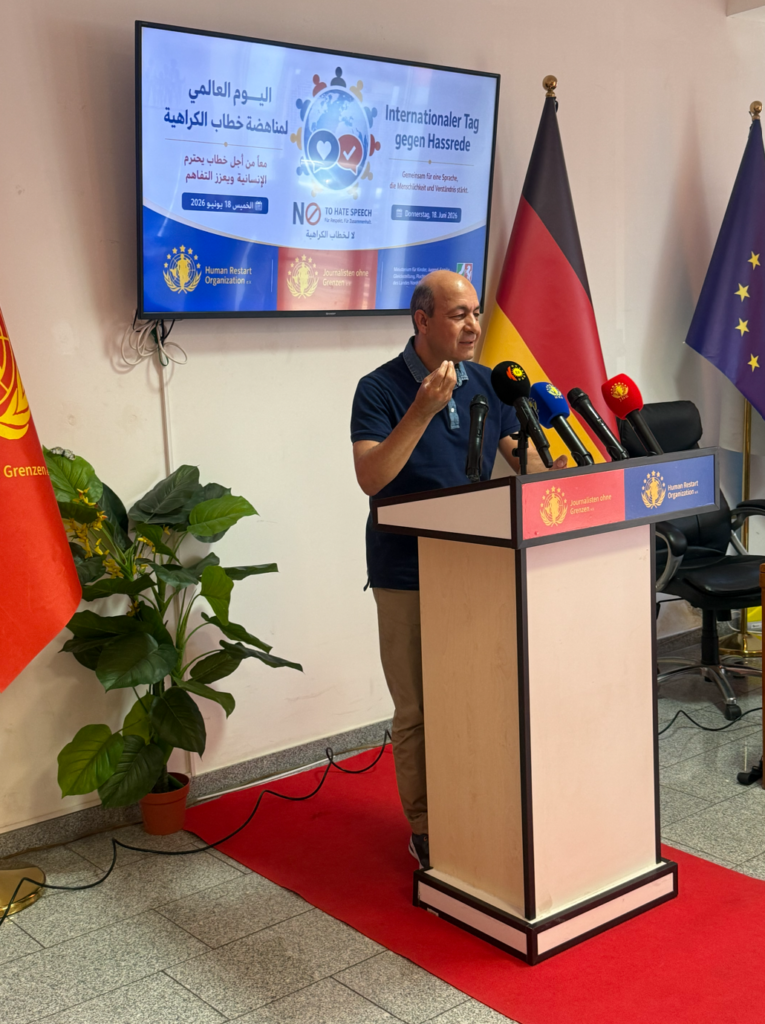


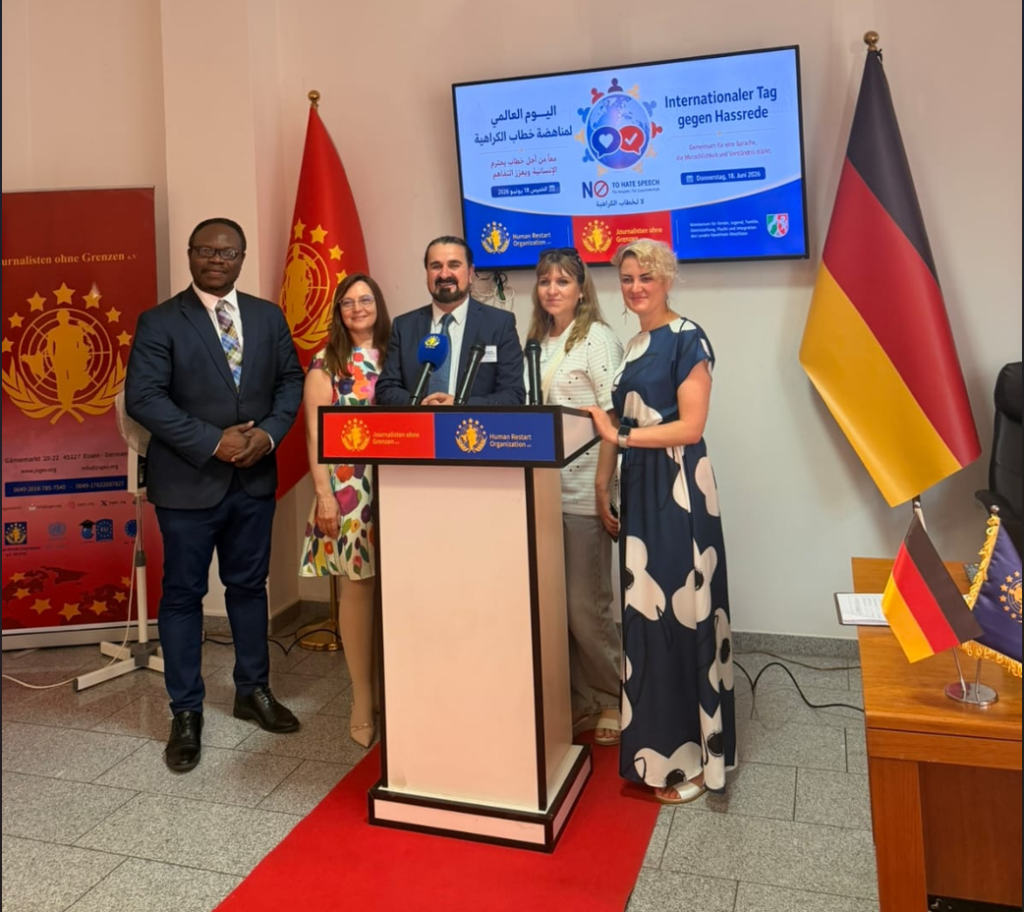
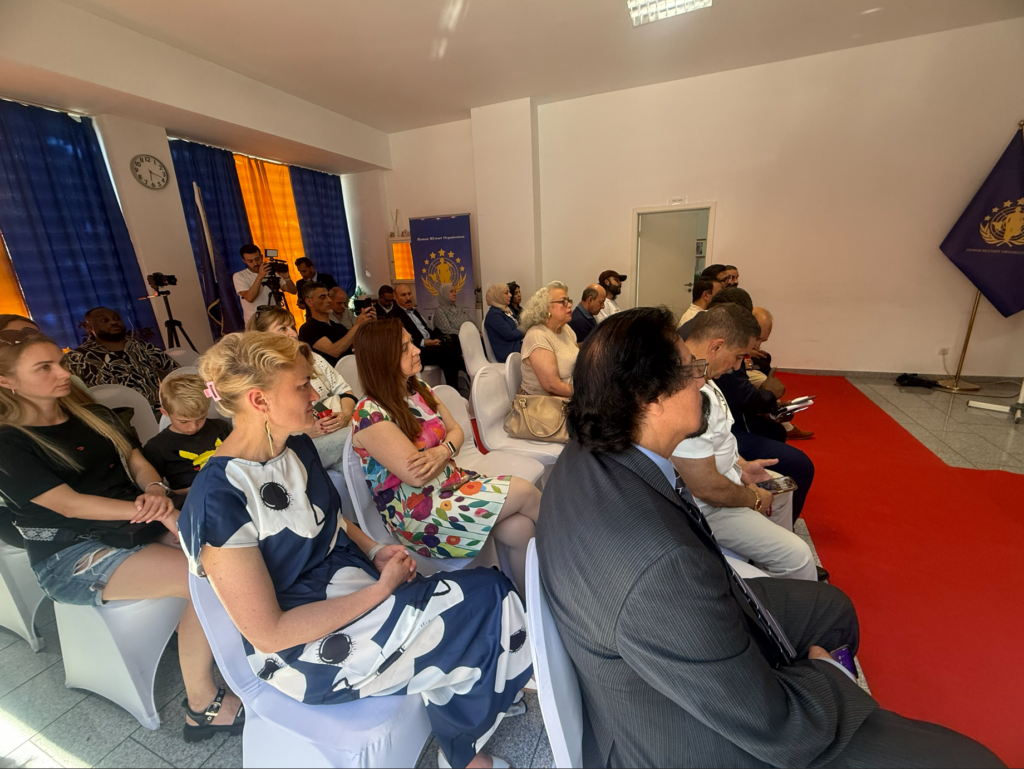
On the occasion of the International Day for Countering Hate Speech, Journalists Without Borders and Human Restart organized a dialogue seminar to discuss the growing challenges of hate speech in societies and explore ways to build communities that are more just, tolerant, and respectful of human dignity.
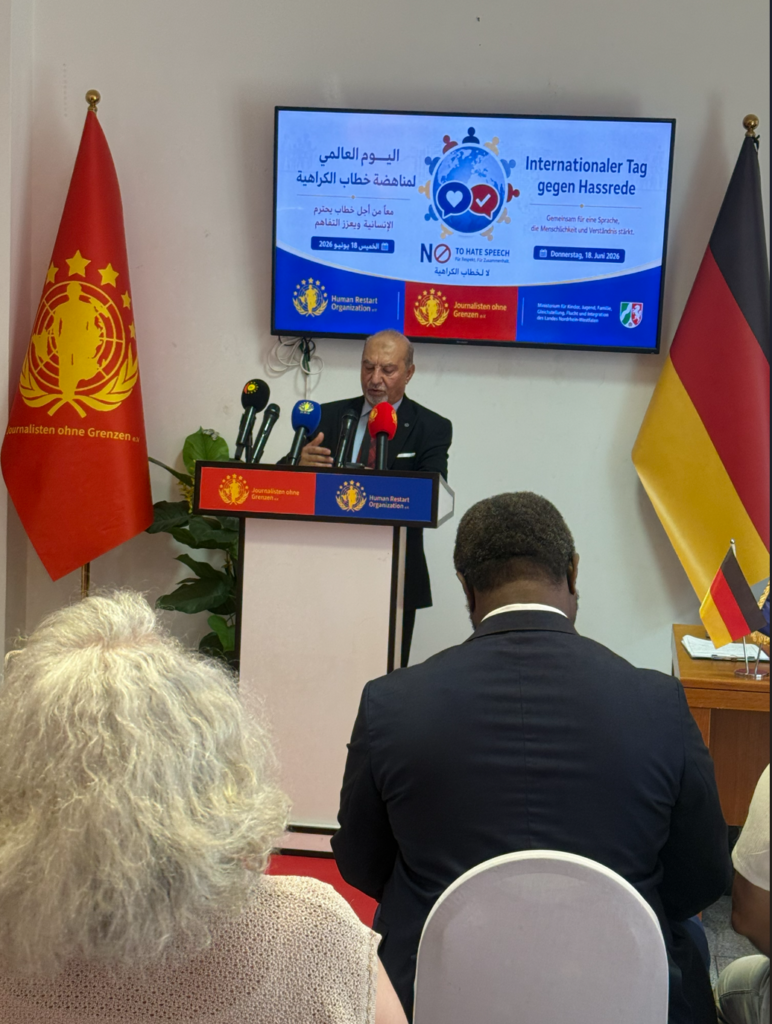
The seminar opened with remarks by Dr. Farhad Ali, President of both organizations. He highlighted the noticeable rise in hate speech around the world in recent years, particularly with the widespread use of digital media and social networking platforms. He stressed that this development places greater responsibility on individuals and institutions to confront this phenomenon and limit its harmful effects.
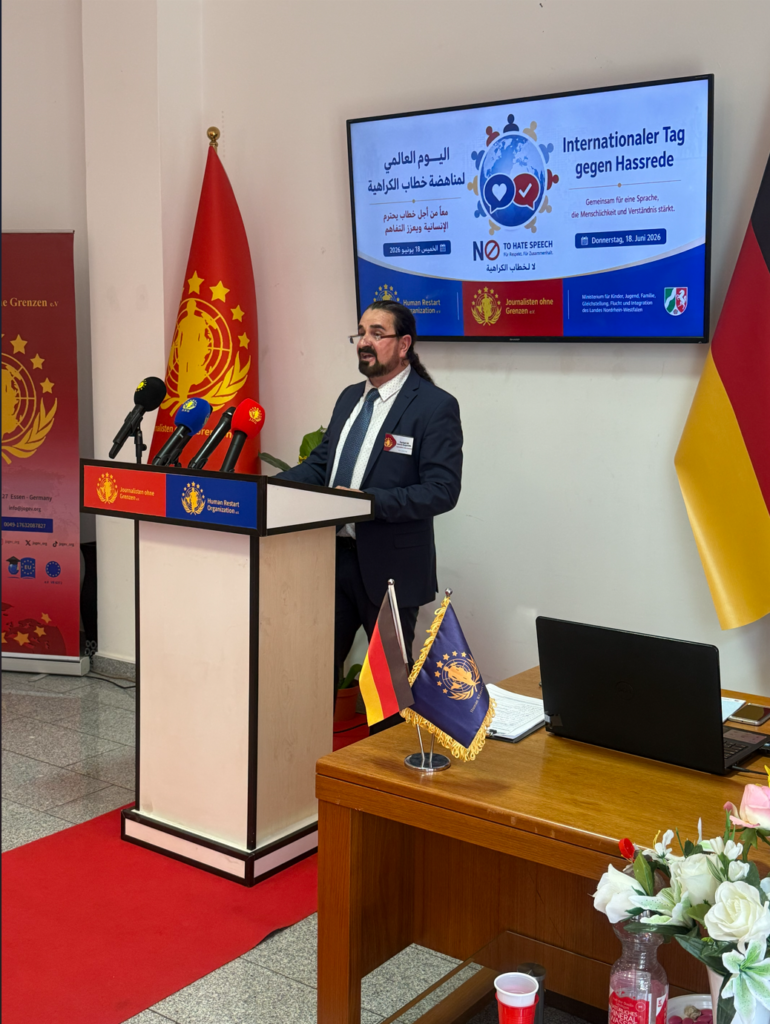
Dr. Ali emphasized that free and professional journalism is one of the most important pillars in combating hate speech and promoting dialogue and mutual understanding. He concluded by calling on media organizations, educational and cultural institutions, and civil society organizations to work together to foster a culture of peace, respect, and the rejection of hatred and intolerance.
The seminar then featured a speech by Mr. Mustafa, a former judge in the courts of the Kurdistan Region of Iraq. He noted that history has repeatedly shown that hate leads only to further conflict and social division, hindering human progress. He emphasized the importance of embracing cultural and intellectual diversity as a source of strength and prosperity, adding that combating hate speech is a shared responsibility of individuals, organizations, and governments.
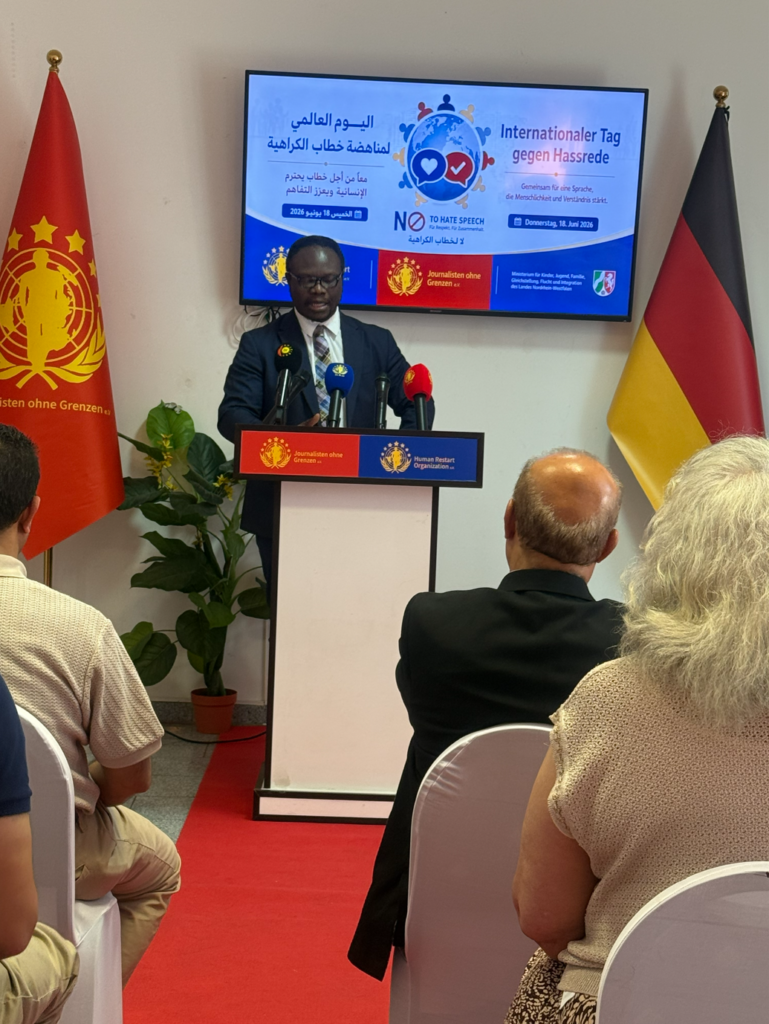
Dr. Kevin Uguru, an integration activist based in the city of Essen, stressed the importance of accepting different ideas and cultures as the foundation for peaceful coexistence. He referred to ongoing efforts to promote positive diversity, reject all forms of hatred and violence, and strengthen the values of respect, cooperation, and mutual understanding among different communities.
Journalist Mohammed Jawad AlKhafaji then spoke about the various forms of hate speech in today’s world and the role of traditional and social media in spreading it. He warned of its direct impact on social cohesion and community peace, emphasizing the responsibility of educational and cultural institutions, as well as civil society organizations, to promote tolerance, respect for diversity, and the rejection of all forms of hate speech.
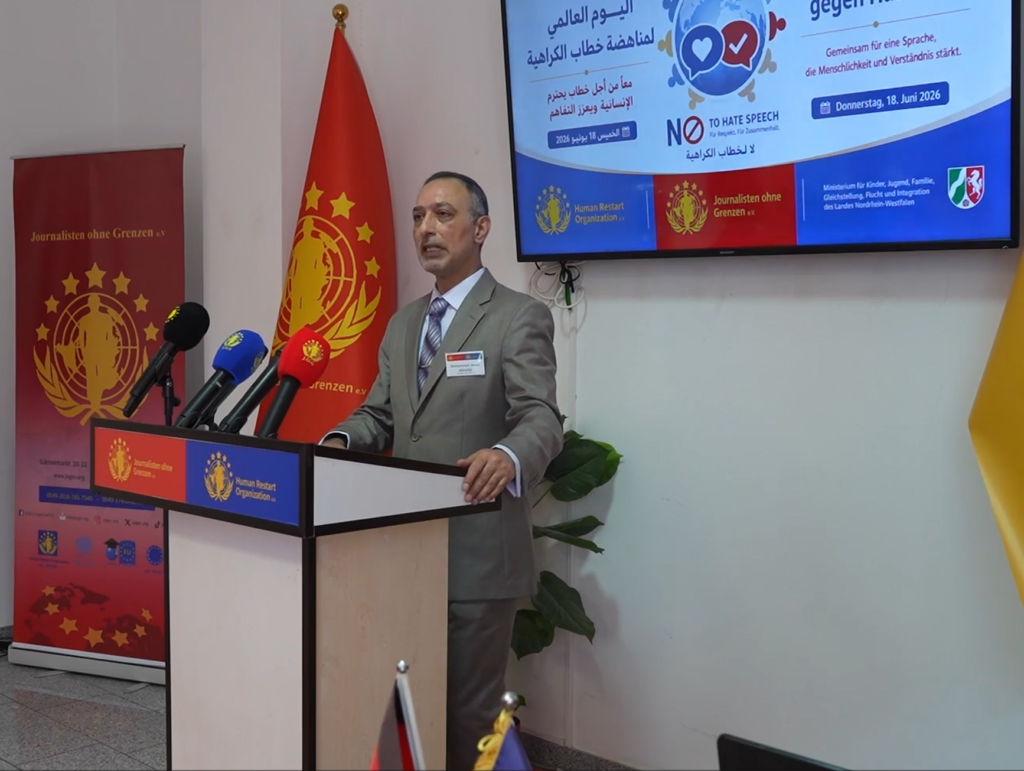
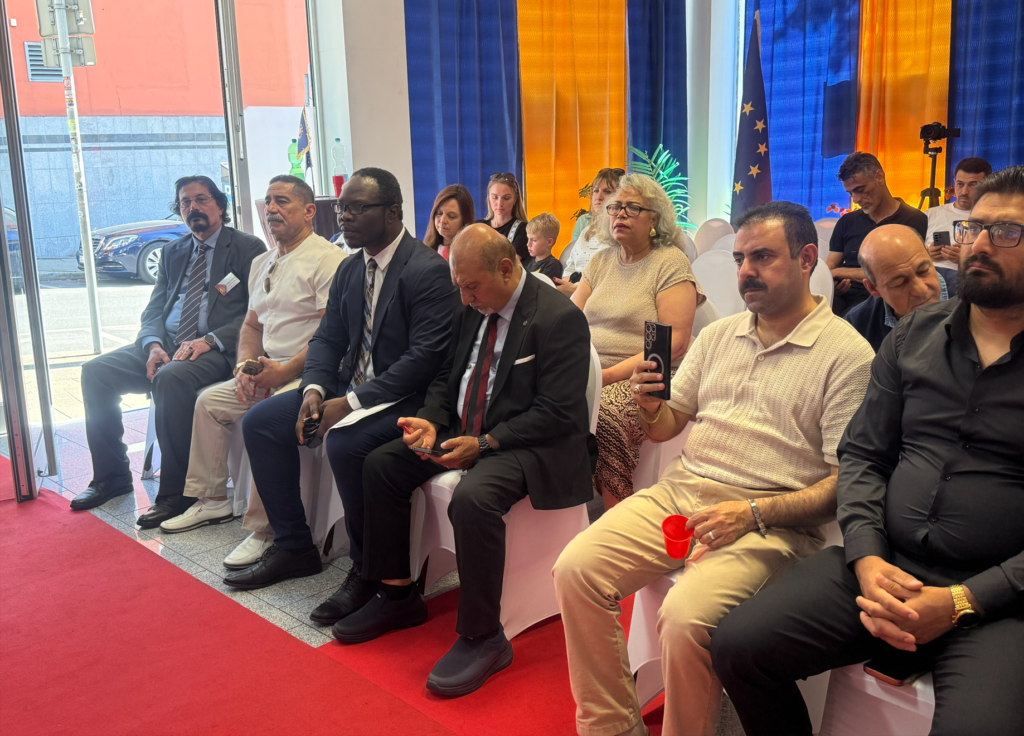
At the conclusion of his remarks, AlKhafaji invited participants to share their views and propose practical solutions for countering hate speech and promoting a culture of compassion and mutual respect. Several participants contributed valuable insights and shared their experiences during the open discussion.
The seminar concluded with a distinguished poetry recital by poet Munir Khalaf, whose poems emphasized that peaceful coexistence and a culture of dialogue and tolerance can only be achieved by spreading love, respect, and humanity throughout society.